 |
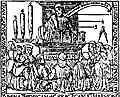
and is clearly expressed by a number of the older teachers, among others Johannes Tinctoris, Franchino Gafori, Andreas Ornithoparcus, and Pietro Aron.
The details are described elsewhere, but the basic ideas are these:
|
you
can click on the Flash icons for an animated presentation
with sound, about 50 Kb each: |
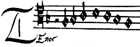
1. you begin with a melody, usually in the tenor voice: tenor = 'a steady flowing stream':
 |
 |
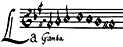
2. then a second voice is added, 'discantus', 'a separate song', so that together they make complete two-part harmony:
 |
|
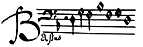
3. a third part is added, normally under the tenor, and is therefore called 'contratenor bassus' ('a low part against the tenor'); the composition also sounds complete in three parts:
 |
|
4. finally a fourth part is written, normally above the tenor and thus called 'contratenor altus' ('a high part against the tenor'):
 |
|
|
Summary
of the whole process, 100 Kb:
|
|

